Is The Forest Floor Organized?
Celine, the absurd can show us what the systems try to hide.
Celine -
So last time I was about to tell you about how well homeschooling psychotherapy and human formation work, and I said most of the benefits were cognitive. I am impressed that I got any benefits at all, because my resources were one-sided. I didn’t have the modern internet. Books were severely restricted. Visits with friends and family were infrequent and only sometimes informative. Priests would drop tidbits in their well-written homilies at Mass. Eventually we listened to some carefully curated and censored podcasts, conferences and articles at meals that may have been relevant. And we had annual, sometimes bi-annual speakers address us.
There were trends in religious speakers addressing human formation. Unfortunately a lot of it also had the tone of pop psychology, it was just Catholic pop psychology and as such often went in the direct opposite direction of mainstream fads.
I do need to mention something before I go further regarding this. Last time I acknowledged that the culture at large was working to destigmatize mental illness and has met with much success. For about three times as long, it had also been working to denigrate religious practice. If you look at the statistics of how many Americans are church-involved, it seems like that has been a successful effort, too. A common complaint among my religious circles was: psychology is usurping religion and morality. This greatly complicated matters for me. The objections my superior brought up were not baseless. The whole world was trying to figure out where psychology and psychiatry fit in the grand scheme of things. And that meant this was not merely a challenging treasure hunt for a doctor. This was me judging the merits and claims of institutions that were millennia-ancient against the claims of a century-old experimental science. And the verdict would affect my entire life. No stress, right.
As I was saying, Catholic pop psychology was not quite the cut-and-dry “pray harder and suffer without complaining” that I alluded to earlier. It was entertaining, so the convent did engage these speakers sometimes. I was introduced to 12-step programs first. I learned a lot about codependency and I still learn daily. I heard different toxic behaviors described and named for the first time.
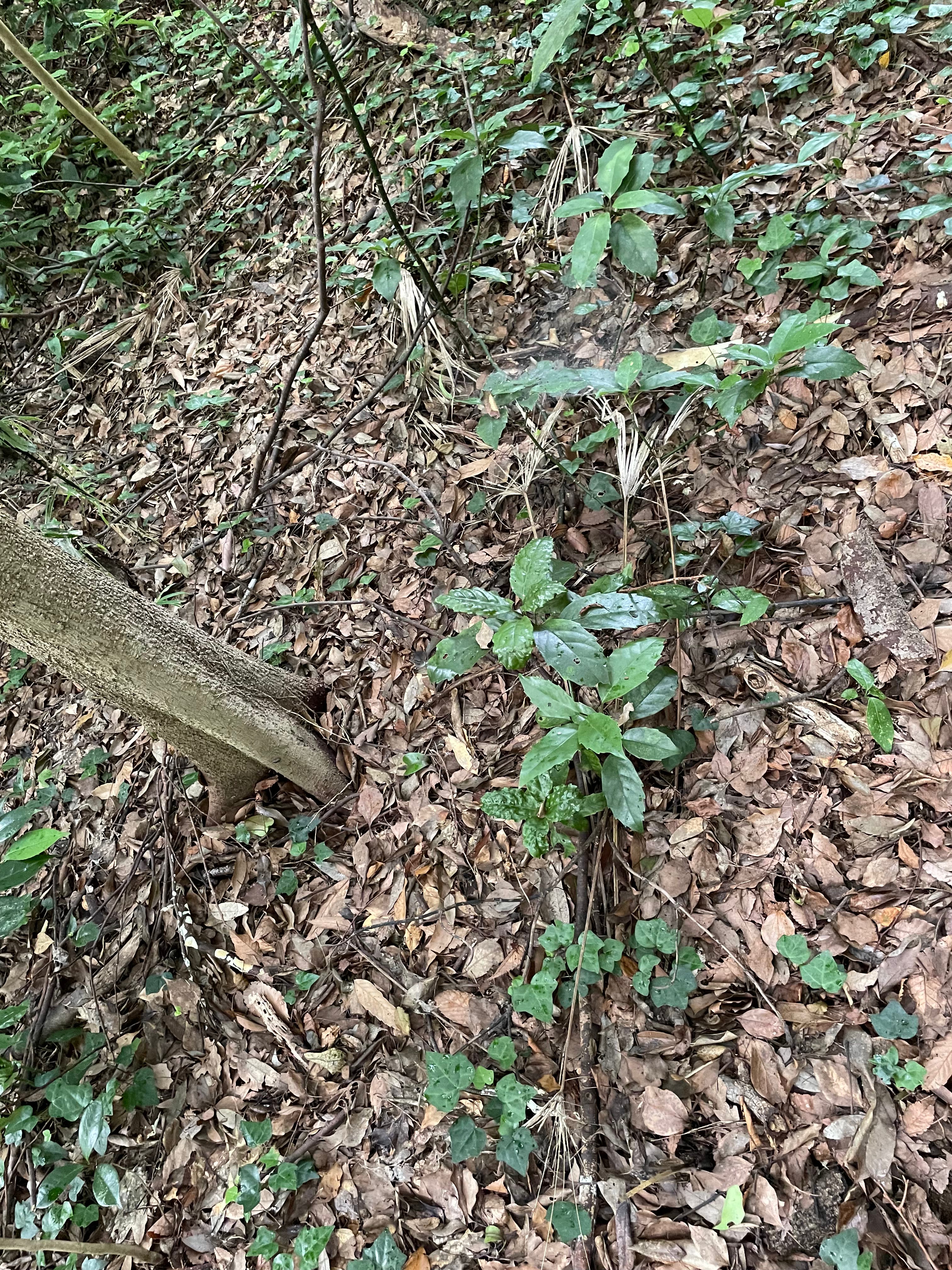
I learned to recognize some of my patterns of behavior and feeling, like my need to have things organized to the point that a walk in our beautiful forest drove me crazy because I felt like I needed to rake up all the messy leaves and pile up all the dead, strewn branches and pinecones. This was such an absurd experience, even to me, that when it happened it broke the cycle. I still love organizing stuff, but I can live with messiness, too. Organizing things gives one a sense of control when everything else feels out of control. It taught me that I felt relatively powerless.
I learned about dissociation, which explained why I bumped into things constantly and did not feel emotions the same way as other people.
I learned about stress load and anxiety. This one took the form of an informal multi-year study across the convent population revolving around breaking stuff.
Our superior was utterly horrified at the rate at which the rest of us destroyed things. She claimed no one in her family 80 years ago even as small children had ever broken anything because they simply did not dare. And yes, American throwaway consumerism promotes owner carelessness. Was that the issue with all these nuns? Well, one of the biggest offenders was not even Western, so, not so sure about that. Another nun broke everyone’s records by breaking something every day for months, and frequently they were more expensive than a coffee mug. And then she suddenly stopped breaking things. I am a fairly careful person and went a long time without breaking stuff. But even I went through a phase and I studied my feelings to help explain what was happening. I broke things when my anxiety was higher. I sensed a similar nervous state in other nuns going through accident sprees.
The superior did not help the situation with her policy, but she did help my research. In an effort to break us out of our carelessness, she decided that every time we broke something we would owe half our daily hour of free time to assigned chores. On top of that we had to publicly apologize for every broken item. If the accidents had been mere carelessness, this policy would have resolved most instances. Instead, accidents multiplied. So did scruples. What started off as “Stop breaking the plates!” turned into “I broke off three tomato flowers so now we will not have three tomatoes to eat.” If the accidents were happening because people were stressed out, deleting half their tiny bit of personal/siesta/exercise time to manual chores to “pay” for all damaged (not just destroyed) common property even though they had already surrendered literally everything they had and guilt tripping them and demanding that they publicly apologize for their lack of respect for common property each time too seems like a great way to push their anxiety to the next level and ensure more destruction. For my part, even if I enjoyed the chore, more often than not I damaged something else during the penance chore. It was an intense lesson and I wish everyone had learned it as well as I did. We are often tempted to judge the accident-prone; we would probably do better to offer a helping hand to steady them. We judge ourselves too, when really it is a signal for our benefit, alerting us that we are running-on-empty.

I do not exactly remember when the somatic part of healing became part of my awareness. In Catholic theology and the Bible, the body feels like it gets extremes. Sometimes its identity is corruption that needs to be punished and pummeled into submission, something that can’t be trusted to do the right thing and that is going to give out on the spirit eventually, so it can’t even be trusted to “just be there” like a friend. Other times it is a vessel of light, partner in glory, its worship is specifically desired by God, it is feasted in celebrations, it is good. My convent’s mission was heavily liturgical and liturgy is all about orienting the body and its senses toward spiritual worship, using posture and dance, incense and flowers, chants and sounds, food, artwork, decorations and splendid clothing, as well as the physical presence of fellow worshipers. So I guess the somatic importance was there from the beginning. Then there were the studies about the importance of infant touch for survival and hugs for emotional happiness. When I first entered the convent, my dissociation and tension were such that I did not appreciate being touched. There was practically no touching in the convent. The more I gleaned about the importance of touch, the more I wanted to try it and the more the rules tightened about it.
After ten years I applied for Solemn Profession. I was turned down for reasons that seemed utterly specious to me. There were plenty of GOOD reasons to turn me down and ask me to leave. I was, however, instead offered the opportunity to have meetings with a fellow nun who was a retired mental health professional. This was a period of crisis for me, and the meetings were the first time I was validated. The suffering I had been carrying alone for my entire life did not mean I was insane, it meant I had been through some hard stuff in life and I was coping with it.
At exactly the same time, I was validated in another way, when someone I had greatly admired since I was a child took some time to listen to my story compassionately and did not reject me in my vulnerability. The shock of that interaction, including a warm handshake, quashed my inner critic almost singlehandedly, which manifested in improved posture, plus a much sweeter and exponentially more fluent way of expressing myself. Up to that point I was continually being corrected for slouching and for being sarcastic and critical in the rare times I was not just silent, although I was oblivious on all counts. Whether I was being gaslit sometimes I still wonder, but the complaints were much fewer while I spoke much more often. Oddly enough, that same person was the only person in my entire life at the convent to ever suggest I possibly did not have a vocation. I did not want to believe it.
A year after all that, I did have the solemn profession ceremony. I was not actually in a position to make that decision with true freedom, too much from my past was still unaddressed and too much human formation was still underdeveloped. The five years following that ceremony were a series of heartbreaking events that shattered my sense of stability in the convent and bereaved me of dear ones. The convent had tentatively shifted to acceptance of mental illness and therapy, but was very selective of practitioners. I tried two more professionals by phone consult, but the lack of somatic therapy curtailed any progress. I felt like I was in an echo chamber explaining everything that was dysfunctional and all the professionals could say was “you’re right.” Not exactly helpful.
Covid did not hit us the same way it hit the world. Being cloistered, we were already on a stay at home order and had built a semi-independent world on our mountaintop ranch to support that. The toilet paper crisis was super annoying, and so was people being forbidden to attend our church services. Other than that, we all escaped without catching covid or shifting lifestyle much. We heard what was happening though, and I took it very hard. Yet more instability, more betrayal, more stress.
The following year, I collapsed. Temporary intermittent paralysis. I just could not take any more. I wasn’t sick. My tests were normal. I was sick of being ignored, overworked, lied to, uncared for in the ways that were missing. I wanted to be treated like a human being and feel like a human being. I was very confused about what was happening and after a few months the symptoms disappeared for nine months. Then the symptoms came back with a vengeance. I demanded a leave of absence to get help, and since I was now solemnly professed and not in formation anymore, the convent had a canonical responsibility to facilitate it. My homeschooling in an inhospitable environment had done what it could and it wasn’t enough.
Thankfully, I was about to find some more of the help I needed.

This post is the sixth of the Dear Celine Series on Grasp The Essentials— letters to an imaginary friend about what 16 years inside a cloistered monastery taught me about the world outside, and why neither one has quite figured out how to treat people like people.
Previous Letters: 1 2 3 4 and 5…

ABOUT THE AUTHOR
Essie Bourke is a certified massage therapist specializing in craniosacral therapy (Upledger Institute) in Orange County, CA. She is the owner of Chaos To Clarity, LLC, a private manual therapy business. She spent her early adulthood as a cloistered nun before leaving and rebuilding her life from scratch. She now works with the nervous system professionally and writes about what she notices — inside institutions, inside bodies, and inside a culture that keeps wondering why everyone is so exhausted.